 Alexey Kuznetsov
Article Highlights
- Layer1 - a standalone blockchain with its own consensus.
- Layer2 - an add-on for accelerating operations on top of the base layer.
- The second layer reduces fees by dozens of times while maintaining security.
- Both layers complement each other in modern DeFi architecture.
Table of Contents
- Essence and tasks of Layer 1
- Principles of base layer operation
- Why the industry needed Layer-2
- Mechanics of solving the scalability problem
- Technology overview: Lightning Network and Rollups
- Comparison: Layer 1 vs Layer 2
- Pros and cons of Layer-1
- Strengths and weaknesses of add-ons
- Synergy of two layers
- Future of multi-level architecture
- Summary: what to choose for a project
- FAQ
What is Layer 1 in Blockchain
Layer 1 - is the base blockchain protocol "out of the box". This is where consensus rules, transaction validation, and cryptographic security reside. Bitcoin, Ethereum, Solana - these are all standalone first-layer networks that do not depend on other blockchains.
All transactions here are recorded in a "final" ledger distributed among thousands of nodes worldwide. They provide fundamental reliability but pay for it with speed: base Ethereum processes only 15-20 transactions per second.
How Layer 1 Works: Principles and Examples
Layer-1 operation is built on ensuring security without intermediaries. Every node in the network verifies every transaction. For example, in Ethereum, this happens via the Proof-of-Stake algorithm, and in Bitcoin - through the energy-intensive Proof-of-Work.
However, such reliability comes at a price. Data processing speed is limited by network throughput. According to CoinMarketCap data, popular networks often face "traffic jams" when the number of requests exceeds the blockchain's capacity, leading to rising fees.
What is Layer 2 and Why is it Needed
Layer 2 - second-layer solutions operating on top of an existing blockchain. They do not change the base protocol but create "accelerators" for routine operations. Why is this necessary?
During peak hours, the fee for a simple swap on Ethereum reached $50-100. The second layer takes over everyday transactions, leaving only the final results in the main network - like an accountant consolidating thousands of entries into a single report line.
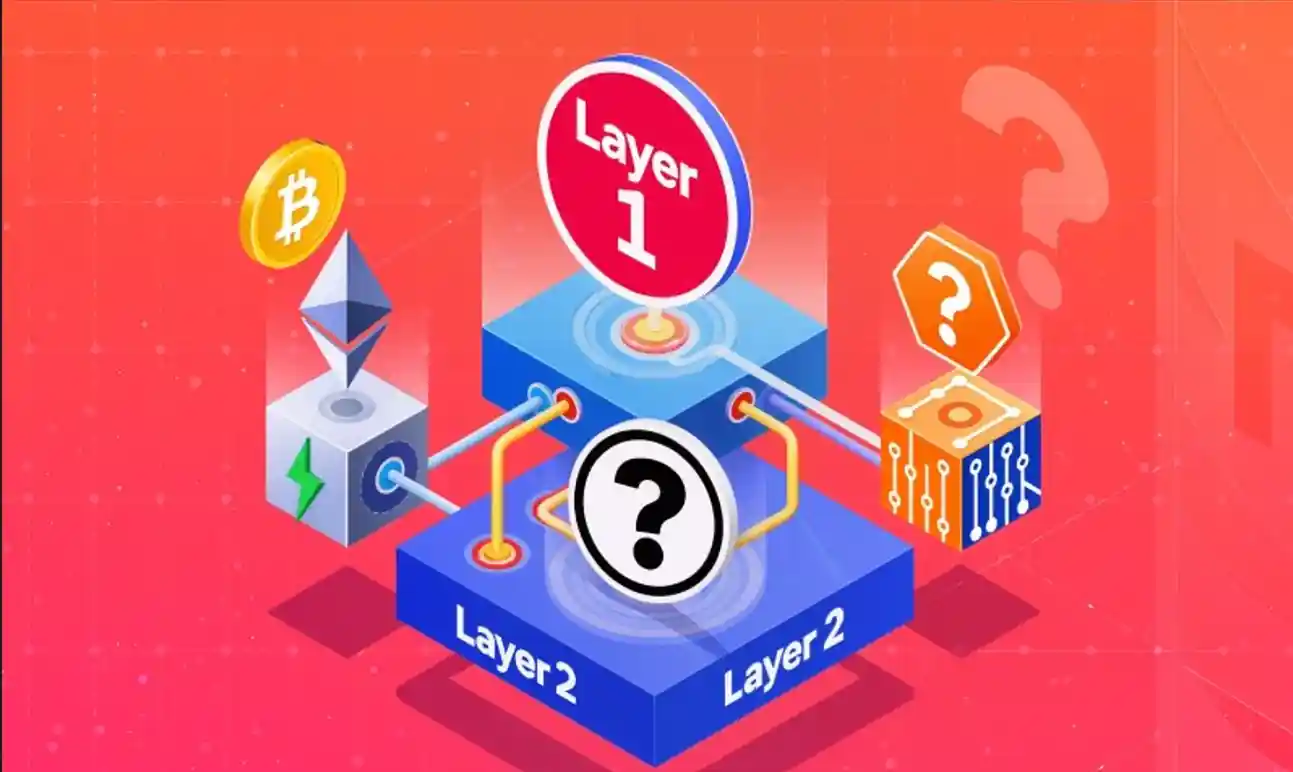
Layer 1 - is the blockchain foundation, maximum reliability, but not the fastest. Layer 2 - is an accelerator add-on that removes routine tasks from it, making transactions faster and cheaper.
How Layer 2 Solves the Scalability Problem
The mechanics are simple: instead of recording every transaction on the blockchain, Layer2 groups thousands of operations into a single batch. This batch is periodically recorded on Layer-1. As a result - speed grows hundreds of times, and fees drop to cents.
At the same time, security is maintained: final data is still fixed in the reliable base layer. Platforms like Nadoswap use this approach for instant swaps without painful fees.
Examples of Layer2 Solutions: Lightning Network, Optimistic, and zk-Rollups
Main types of Layer-2 solutions differ in operating principles and the level of compromise between speed, cost, and technological complexity:
- Lightning Network (for Bitcoin) creates payment channels between users. You open a channel with a deposit, perform an unlimited number of microtransactions, and upon closing - fix the result on the blockchain.
- Optimistic Rollups (Arbitrum, Optimism) act on the "trust but verify" principle. Transactions are considered valid by default, but anyone can challenge them within 7 days through a fraud-proof mechanism.
- zk-Rollups (zkSync, StarkNet) use zero-knowledge cryptography. Every batch is accompanied by a mathematical proof of correctness - verification is instant, and funds can be withdrawn without delays.
Layer 2 solves the main problem of first-layer blockchains - scalability. A payment channel network for Bitcoin is suitable for instant micro-payments, optimistic rollups make Ethereum cheaper at the cost of delays, and zk-rollups offer the most technologically advanced balance of speed and security. Ultimately, the user gets fast and accessible transactions without sacrificing the reliability of the base network.
Layer 1 vs Layer 2: Main Differences
To put it simply, Layer 1 - is "the blockchain itself," which is responsible for everything most important: the rules of the game, security, consensus, and the final recording of data. It is maximum independent - it does not rely on any external systems, but this autonomy is paid for with high fees, especially during network congestion.
Layer 2 - is an add-on over the base layer created to make life easier for users. It takes over everyday operations and neatly fixes the result in Layer-1. At the same time, the second layer inherits the security of the main network but partially requires trust in the mechanics of the solution itself or its operators.
It is important to understand that L1 and L2 do not compete with each other. It is not an "either-or" choice but a deliberate division of roles. The first layer - is a solid foundation, the second - is a convenient and functional add-on. Without L1, there will be no trust; without L2 - no mass adoption. Together, they make blockchain not only reliable but also practical.
Advantages and Disadvantages of Layer 1
To understand why the industry needs a multi-layered architecture, it is necessary to soberly assess the capabilities and limitations of fundamental networks.
Pros. Maximum decentralization, proven security, independence from third parties. Ideal for critical operations.
Cons. Low throughput, high fees during peak hours, slow confirmations, complexity of updates without hard forks.
Advantages and Disadvantages of Layer 2
The second layer looks like a salvation for the average user, but comfort and speed also have a price - just not always in money.
Pros. Speed up to thousands of transactions per second, fees in cents, instant confirmations for the user, flexibility in development.
Cons. Dependency on the parent network's functioning, additional complexity (bridges, withdrawal waiting periods), risk of operator centralization in some solutions.
How Layer 1 and Layer 2 Interact
Imagine these layers - as a well-coordinated team where everyone minds their own business. They do not compete but work in tandem to stop blockchain from being slow and expensive.
Who is responsible for what: Layer 1 and Layer 2
All fundamental, "heavy" tasks - for example, creating new tokens or changing protocol rules - are handled by Layer 1. This is the foundation, where every letter of the law matters. But all the daily bustle: quick swaps, small transfers, and active trading - goes "one floor up" to Layer 2.
It works simply: when you perform a swap on an L2 platform, everything happens instantly and almost for free for you. While you enjoy the speed, the system in the background collects thousands of such operations into one compact batch. Periodically, this data batch is sent "down" to Ethereum or another base blockchain to permanently fix the final result in history.
The Future of Layer 1 and Layer 2 Technologies in the Blockchain Ecosystem
Today, we stand on the threshold of a transition from monolithic networks to a "modular" architecture. This means that blockchain stops trying to do everything at once. Experts agree: in the coming years, Layer 1 will finally turn into a powerful "digital vault."
In 2026, we expect a real breakthrough that will solve the main modern problem - network fragmentation. What exactly will change for the average user:
- Seamless transfers. You will no longer have to return to the "expensive" Ethereum mainnet to transfer funds from one layer-2 to another.
- "Invisible" blockchain. Technologies will become so natural that the user won't even know which network they are currently in.
- Ultra-low fees. Transaction costs could fall to fractions of a cent, making micro-payments realistic.
- Unified liquidity. Different networks will stop being "islands." Your tokens will be available for use in any application across the ecosystem.
Mass adoption will happen precisely when technologies become invisible. When you exchange assets on Nadoswap, you are already touching this future, where only speed and convenience matter, and complex technical work is handled by layer interaction algorithms.
Conclusion: Which Layer to Choose for Your Project
The choice depends on priorities. For value storage and critical operations - time-tested Layer 1. For everyday payments, swaps, and mass applications - layer-2.
The optimal approach today - is hybrid: L1 security plus add-on speed. This is exactly how modern DeFi platforms are designed, making cryptocurrencies practical without losing decentralization.
FAQ
How does layer-1 differ from layer-2?
The first layer - is a standalone blockchain (Bitcoin, Ethereum). The second - is an add-on on top of an existing network to speed up transactions without changing the base protocol.
Why are fees in layer-2 lower?
Thousands of transactions are combined into a single batch recorded on the main network. The gas cost is split among all participants in the operation.
Are there risks of losing funds when using layer-2 solutions?
Risks are minimal when working with proven platforms. Withdrawing funds from optimistic rollups takes up to 7 days - this is an architectural feature, not a vulnerability.
Which layer to choose for a startup?
Critical operations - on the first layer. Everyday interaction with users - on the second.
Will the first layer become obsolete?
No. It remains the foundation of security. Even in a rollup-centric future, the base layer provides final validation and protection against attacks.
How to check if an application works via layer-2?
In your wallet settings (e.g., MetaMask), you will see "Arbitrum" or "Optimism" instead of "Ethereum Mainnet." Also, a key indicator - low fees (cents instead of dollars).
Want to learn about cryptocurrency insurance? Check out this and other articles in the Nadoswap blog.